
Night at the Zoo
- 10 evenings in December and January
- time slots from 18:30
- € 19,50
- ARTIS-Park

Darkness reveals: stars shine, animals awaken and your senses sharpen.
ARTIS invites visitors to discover this hidden side. Because at ARTIS, darkness is not a limitation, but a new way of seeing.
Practical info
- where
- ARTIS Zoo
- when
- 19, 20, 21, 22, 23, 28, 29, 30 December 2026 and 2, 3 January 2027
- start timeslots*
- 18:30, 19:15, 20:00, 20:45, 21:30
- closing time
- 23:00
- price
- regular €19,50- | ARTIS members €11,- | students €13,50
Please arrive on time. Your selected time slot is when the show in the Planetarium begins. Doors open 30 minutes before the show starts.
Start your evening at the Planetarium
You’ll start the evening with a live show in the Planetarium. Experience complete darkness, discover the night sky and see the impact of light pollution. Learn what to look for in the sky and discover the wonders hidden behind the intense glow of artificial light. Find out where on Earth the stars can still be seen in all their glory, and what you can do to help keep the night dark!

Walk through ARTIS Zoo in the dark
After the show, take a walk through ARTIS in the dark. You might even spot animals using a night-vision device. In the Aquarium you can watch fish by moonlight. A special audio tour invites you to slow down and learn more about animal sleeping patterns.

Activities for the whole family
There are also all kinds of fun and educational activities for young and old. Join an outdoor class about the universe and learn more about what's going on over our head.


What you need to know
This is how your evening will unfold
The programme starts in the Planetarium. It is important to arrive on time for your reserved time slot, as the doors close after the show has started. Afterwards, you can walk through the dark park.
Volunteers will be waiting at certain locations with night vision goggles, and you can visit the Small Mammal House, Insectarium, Reptile house and the Aquarium. On clear evenings, a Planeteer in the Dutch Garden will tell you all about the starry sky using a green laser. The park closes at 11 p.m.
Please note: the show in the Planetarium will be in Dutch.
Important rules for your visit
To ensure a safe and enjoyable visit, it is important to take the following into account:
• Stay on the paths: For your own safety and that of the animals, it is important that you stay on the designated paths. Some parts of the park are cordoned off for the welfare of the animals.
• Do not use phones or lights: The dark is best experienced without extra light. Switch off your phone and torch during the walk.
• Safety at intersections: Soft lighting has been installed at intersections so that you can walk safely without disturbing the atmosphere of the dark.
• Keep it quiet: Try to make as little noise as possible so that the animals are not disturbed and everyone can enjoy a peaceful evening. Do not tap on the windows of the enclosures.
• Leave on time: Head for the exit by 11 p.m. at the latest so that everyone can leave the park safely.
More like this
Studio ARTIS
exhibition
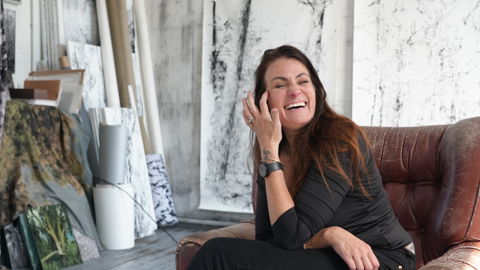
Natura ARTIS Magistra: Nature is the teacher of art and science. This is what ARTIS has stood for since 1838. Nature continues to inspire us with its beauty, ingenuity and complexity. And where nature inspires wonder, art naturally follows.
Get your ferment on!
workshop • €37,50 regulier, €32,50 student, €30,00 lid

Christian Weij, an award-winning fermentation expert, will take you on a journey through the history of fermentation this evening. Did you know that humans began fermenting foods as far back as 7,000 years ago? But which microbes are actually responsible for this process, and what are the health benefits of fermentation? Discover it all this evening—and go home with your very first fermented creation!
Museum Night: The Universe Has Time (You Don’t)
special program • alleen met Museumnacht ticket

The future of Earth looks bright! We’ll be illuminated by hundreds of thousands of new satellites orbiting our planet, taking away such inconveniences like natural starlight. Forget about the Moon as well. It’s about to be striking off on its own. And our star, the Sun? In a couple of billion of years, it’ll be our direct, excruciatingly bright neighbor. That is until it envelopes all of Earth completely, of course.